
Charleston Harbor is always changing. Several times each day, water flows into the harbor from the Atlantic Ocean and then moves back out again. That natural cycle changes the depth, speed, and direction of the water, creating different conditions for the animals that live and feed along the South Carolina coast. That’s why wildlife sightings can vary from one sailing experience to another. Let’s explore how changing tides influence animal behavior and the wildlife you might encounter during a harbor cruise, helping you set realistic expectations when booking sailing charters in Charleston, SC.
- Why Tides Play a Major Role in Charleston Harbor Wildlife Activity
- Wildlife Commonly Seen During Charleston Harbor Cruises
- Making the Most of Your Charleston Harbor Wildlife Experience
Why Tides Play a Major Role in Charleston Harbor Wildlife Activity
Charleston Harbor is an estuary where freshwater from local rivers mixes with saltwater entering from the Atlantic Ocean. As the tide rises, water moves into marshes, creeks, and shallow flats, carrying small fish, shrimp, crabs, and other marine life with it. Charleston dolphins and larger fish might follow these food sources into areas that were too shallow to enter earlier. Meanwhile, birds might gather near current lines, creek mouths, and shorelines where moving water makes prey easier to find.
When the tide begins to fall, the pattern changes. Water drains from the marsh and pushes small animals toward narrow channels, deeper creeks, and open parts of the harbor. That can concentrate prey and create active feeding areas for dolphins, fish, pelicans, herons, and egrets. At low tide, exposed oyster beds, sandbars, and mudflats give wading birds access to small fish and aquatic invertebrates that were hidden beneath the water. These shifts explain why wildlife activity can change dramatically within just a few hours.
Wildlife Commonly Seen During Charleston Harbor Cruises
Charleston Harbor supports a wide range of marine and coastal wildlife. What you encounter depends on your route, the tide, the season, the weather, and a little luck.
Bottlenose Dolphins
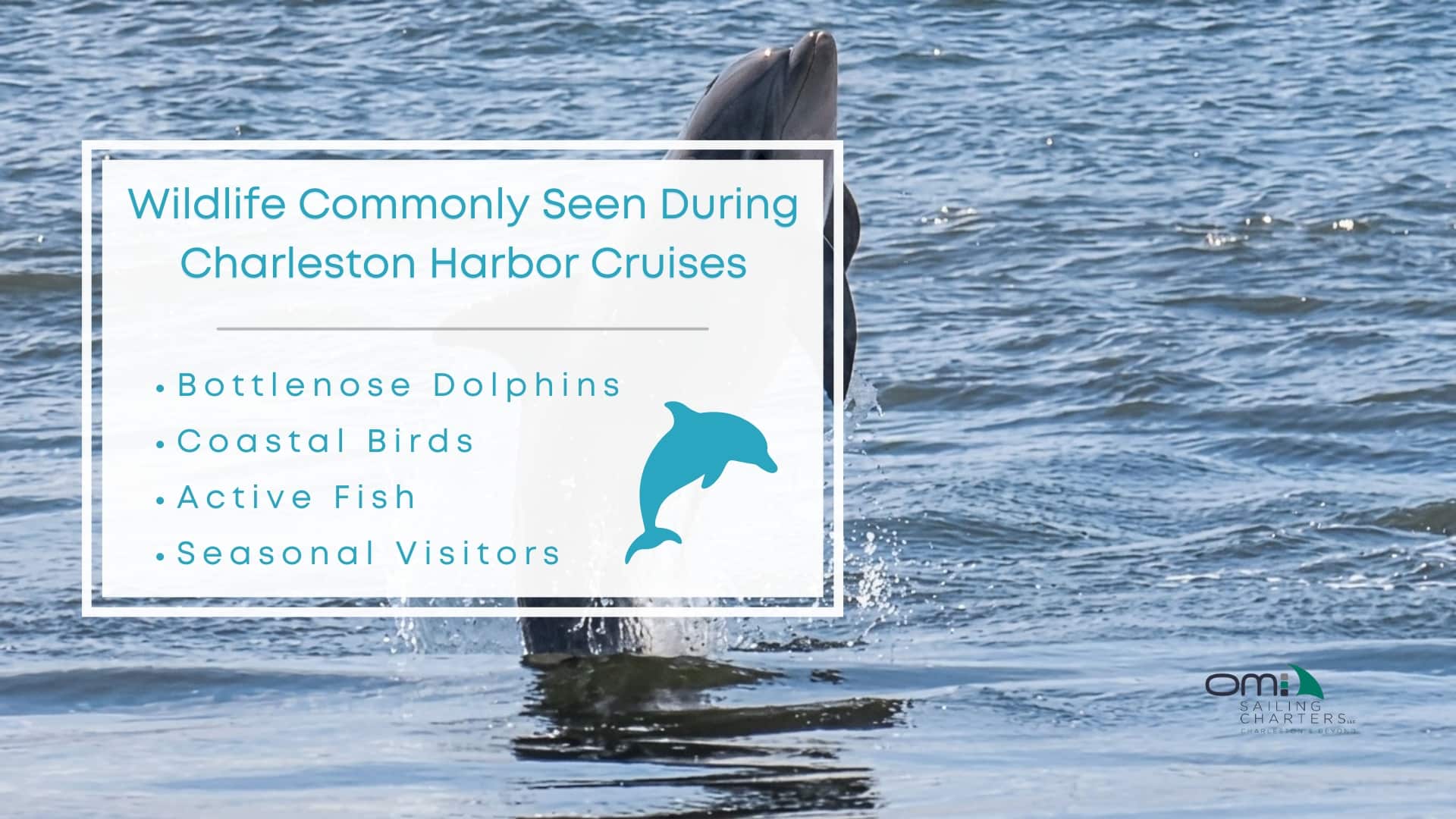
Atlantic bottlenose dolphins are among the most exciting animals you might encounter in Charleston Harbor, surfacing near the boat, swimming alongside the vessel, or moving through tidal creeks and channels. These marine mammals are skilled hunters that adjust their behavior to local water conditions. Strong tidal currents can gather schools of fish in narrow areas, around sandbars, beside docks, or near creek entrances. Dolphins use these locations to chase and trap their prey.
Strand feeding is a feeding behavior typically associated with dolphins along the South Carolina coast. Dolphins drive fish toward a muddy shoreline before briefly pushing part of their bodies onto the bank to catch them. That often occurs in suitable tidal creeks and marsh areas when water levels and shoreline conditions are right. While strand feeding is not something you see on every trip, normal dolphin activity is a frequent highlight of many sailing charters in Charleston, SC.
Coastal Birds
Falling and low tides expose mudflats and concentrate prey in smaller pools and channels, providing valuable feeding, nesting, and resting areas for coastal birds. Brown pelicans often glide just above the water or dive headfirst to catch fish. Egrets and herons are commonly found near marsh edges and in shallow water, watching for fish, shrimp, crabs, frogs, and other small animals. Other possible sightings include gulls, terns, cormorants, ospreys, American Oystercatchers, and occasionally bald eagles, depending on your route and the season.
Active Fish
When you book a private sailing charter, you might not always see the fish beneath the surface during your trip, but their activity often attracts noticeable wildlife. Rising tides allow fish and invertebrates to move into small creeks and flooded marsh areas to feed. As the water recedes, species such as red drum, spotted seatrout, and flounder might gather near creek mouths, drop-offs, oyster beds, and current seams. If you notice birds repeatedly diving into one area or dolphins circling a narrow section of water, active fish might be moving below them.
Seasonal Visitors
Charleston wildlife sightings change with the seasons as water temperature, food availability, breeding cycles, and migration patterns shift. Spring and summer bring warmer water and increased activity from baitfish, shrimp, Loggerhead sea turtles, and offshore predators moving closer to estuaries. Fall and winter can bring shorebirds to South Carolina beaches, sandbars, and protected coastal habitats. Dolphins remain present in the region throughout the year, but their locations and feeding activity might change with water conditions and prey movement.
Making the Most of Your Charleston Harbor Wildlife Experience
Choosing a sailing time that aligns with active tidal movement might improve your chances of seeing animals feeding and traveling through the harbor. Incoming and outgoing tides often create moving currents that carry food and gather fish near creek mouths, marsh edges, and other natural feeding areas. Still, there is no single tide stage that guarantees a specific sighting. Dolphins, birds, and fish are wild animals, and their behavior can change throughout the day.
Bring binoculars so it’s easier for you to watch birds resting on distant sandbars, flying over the marsh, or hunting near the shoreline. A camera or phone with a zoom feature can help you capture dolphins surfacing, pelicans diving, or other wildlife activity without the need to move too close. Keep your equipment ready, since many sightings happen quickly and might last only a few seconds. Remain patient, scan different parts of the water, and listen to the guidance of your captain.
Want to explore Charleston Harbor and its surrounding waterways in comfort? OM Sailing Charters offers a relaxing experience aboard OM, our luxurious catamaran, making us a trusted choice among sailing charters in Charleston, SC. Our seasoned captains, who are familiar with the tides and wildlife patterns in the area, can help you recognize signs of nearby activity. Book your Charleston sailing experience with us here today, or contact us at 843-973-0761 for availability and other inquiries.