
If you’re planning a day on the water with one of the many private sailing charters in Charleston, SC, knowing how tides and currents behave gives you a real advantage. These changing conditions affect when you leave, the route you take, how smooth the ride feels, and how efficiently you sail through the harbor. When you know the water movement, you can set better expectations and enjoy your trip with more confidence. Let’s explore how Charleston Harbor tides and currents influence every part of your sailing experience.
- How Tides Work in Charleston Harbor
- Why Currents Matter for Sailing Routes
- How Captains Adjust Routes Based on Conditions
- Planning Your Sail for the Best Experience
How Tides Work in Charleston Harbor
Tides are driven by the gravitational pull of the moon and the sun, creating a regular cycle of rising and falling water levels throughout the day. In Charleston, you typically experience two high tides and two low tides every 24 hours. These are known as semidiurnal tides. The tidal cycle influences how water moves in and out of the harbor. During a flood tide, water flows inland from the ocean, raising water levels and often making it easier to navigate shallow areas. During an ebb tide, the water flows back out toward the Atlantic, lowering levels and exposing sandbars or mudflats that may not be visible at high tide.
Tidal ranges in Charleston Harbor usually vary between about 4 and 6 feet, though that can change depending on the time of year and lunar phase. Around full and new moons, you might notice higher highs and lower lows, known as spring tides. During quarter moons, the range is smaller, called neap tides. Moreover, timing shifts slightly each day. High tide occurs about 50 minutes later than the day before, meaning you can’t rely on yesterday’s schedule when planning your trip. Keeping track of tides and currents helps you choose the best departure time and avoid getting caught in less favorable conditions.
Why Currents Matter for Sailing Routes
Currents are closely tied to the movement of tides and directly impact how your boat moves on the water. One key concept is the distinction between boat speed vs. speed over ground. Boat speed is how fast you’re moving through the water, while speed over ground reflects your actual progress across the surface, taking currents into account. If you’re sailing against a strong current, your speed over ground can be slower. If the current is with you, you might cover a distance faster and arrive earlier than planned. That’s why experienced captains of sailing charters in Charleston, SC, always factor in the current direction when planning their route.
Currents further affect how you handle the boat, especially when navigating narrow channels or passing through busy areas of the harbor. A strong cross-current can push you off course, making it harder to stay within marked channels, and you might need to adjust your sail trim or heading to compensate for that sideways movement. At the same time, low tide combined with strong outgoing currents can increase the risk of running aground in shallow areas. If you know Charleston Harbor tides and currents well, you can plan routes that keep you in safe water, reduce unnecessary maneuvering, and make your sailing experience more enjoyable.
How Captains Adjust Routes Based on Conditions
A great Charleston sailing day is never based on a fixed path alone. Conditions in the harbor can change throughout the day, so captains often make constant adjustments to keep your ride smooth, safe, and enjoyable. Here’s how skilled captains adapt in real time:
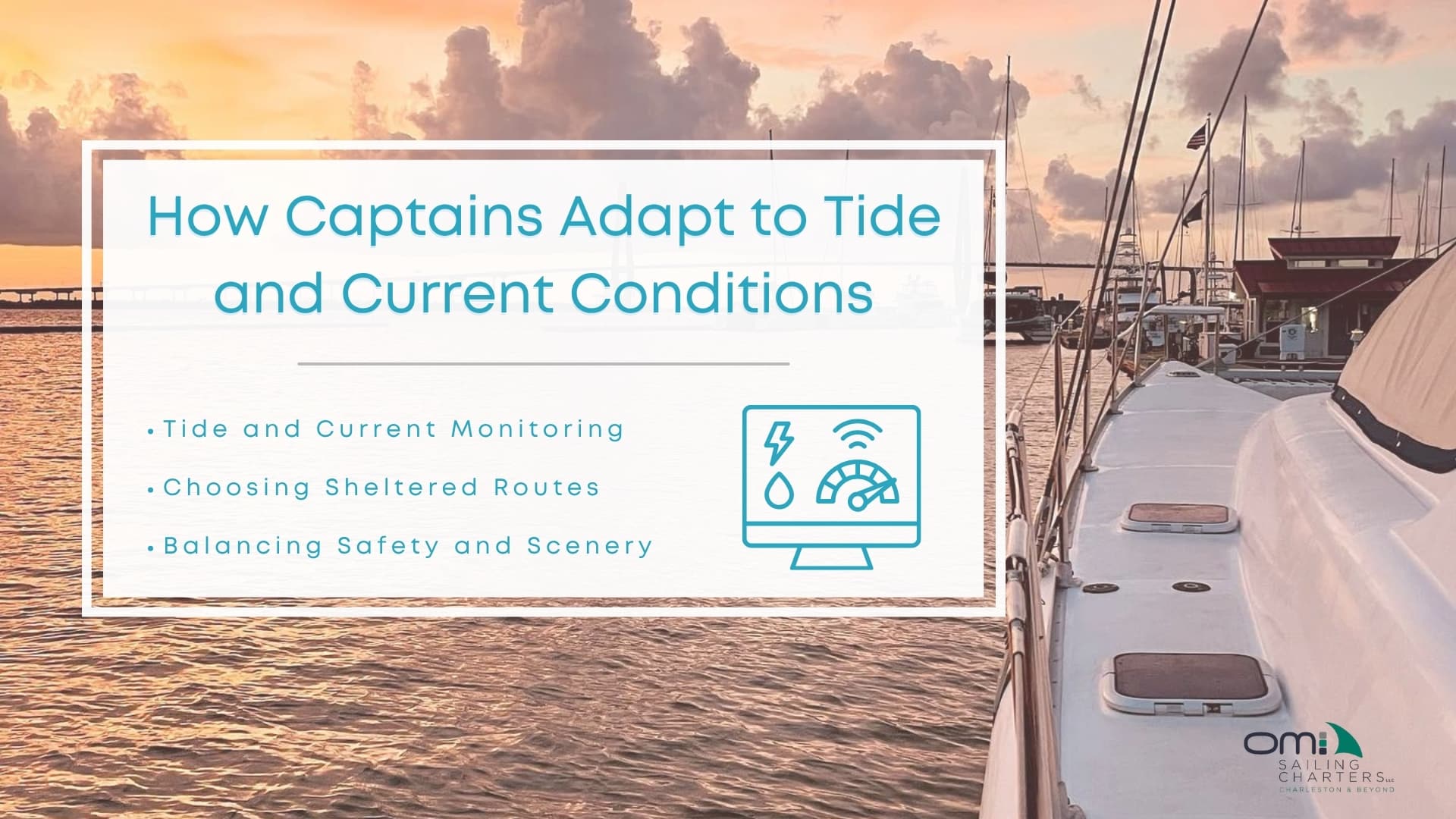
Tide and Current Monitoring
Captains watch tide charts and current data before departure, but still pay attention to what is happening on the water in the moment. Tide tables help them estimate when water levels will rise or fall, while visual cues and local knowledge help confirm how those conditions are actually affecting the harbor. Real-time monitoring enables captains to choose routes that make better use of favorable conditions.
Smoother Paths
When conditions are less calm, captains often choose more sheltered routes to create a more comfortable ride. Instead of heading straight into rougher open-water sections, your captain may move through areas that offer more protection from chop, wind, or stronger current flow to reduce excessive motion and give you a more relaxing experience on board.
Safety and Scenery
A sailing trip should be scenic, but safety always comes first. Captains often balance beautiful views with practical navigation choices, selecting routes that still showcase Charleston’s waterfront while keeping the vessel in safer, more manageable waters. That might mean changing course slightly to stay clear of shallow spots, busy traffic zones, or areas where currents are moving more aggressively.
Planning Your Sail for the Best Experience
If you want to get the most out of your time on the water, it’s best to plan with Charleston Harbor tides and currents in mind. Checking tide tables before booking can give you a better idea of the conditions you might encounter during your trip. Some guests prefer calmer conditions, while others might enjoy a route with a little more movement and energy. Either way, being prepared for changing water conditions helps set the right expectations and makes your outing more enjoyable.
If you are looking for sailing charters in Charleston, SC, OM Sailing Charters offers the local knowledge and on-the-water experience needed to make your trip feel easy, comfortable, and memorable. Our seasoned, USCG-licensed captains understand local tidal dynamics and know how to adjust routes for a smoother, safer experience without sacrificing the beauty of the harbor. Book your next sail with us here today or contact us at 843-973-0761 to learn more about our charter options.